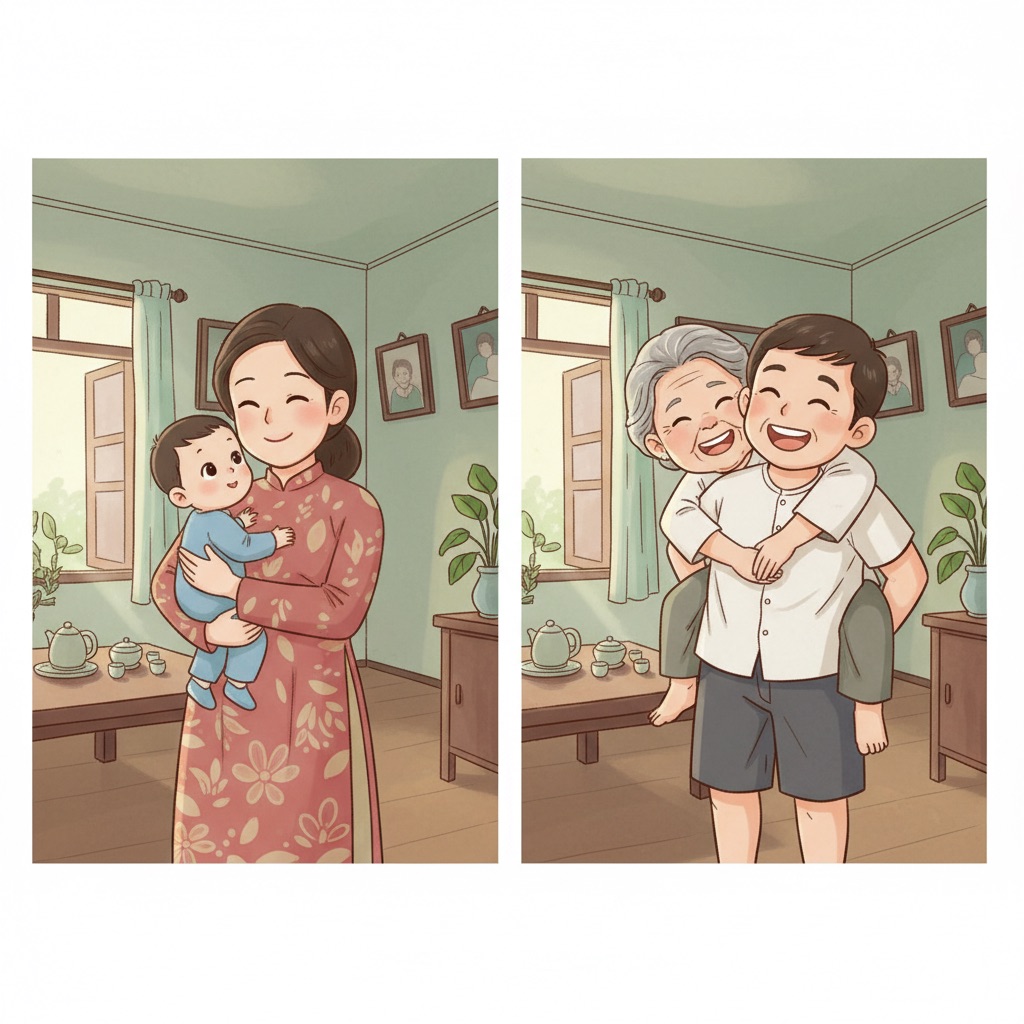
I am coming to a point in my life where my mum, who brought me up as a single parent, reached retirement age this year. What is the consensus for retirees in Australia?
Retirement now is a lot different from what it was 30 years ago and will be different 30 years in the future. What has endured in Vietnamese culture, or at least in my household, is that my mum has been the pillar keeping my grandparents in health, with my grandpa living until his 80s and my grandma this year, 101.
Another pillar is the cultural expectations and guilt I feel when I see this, where I am balancing establishing my life here as a first-generation Australian with giving back what was laid out for me by my mum and family.
They came here with nothing for me to make something out of my life, which they never could.
Setting mum up in the next stage of her life, I always overheard in a joking tone that I would just put my mum in a nursing home. It gave me a subconscious sense of guilt, with alternatives not being feasible if I was to support my family, given the cost of living in 2025 and beyond.
During an entrepreneurial program I participated in, one of the mentors spoke about her mum's experience in a nursing home. The facilities are great; she visits her often, and it is not the dire life that is made out to be in anecdotal accounts.
The Anatomy of Guilt: A Generational Squeeze
This subconscious guilt is the product of a deep, cultural collision. For many older Vietnamese-Australians, who migrated after the war, "successful ageing" is defined not by the Western ideal of independence. I see values of collectivism, interdependence and intergenerational bonds being the hallmark of what matters at the end of the day.
As a millenial, seeing my extended family approach retirement age, I am caught in the tension between that inherited duty and the Australian cultural norm of personal establishment. This is amplified by the migrant story. The life my mum wished for me is the one that now pulls me away from the traditional model of care.
The anxiety about today's cost of living is the other side of the story. The traditional model is becoming economically impossible. My generation is facing a structural financial squeeze that my mother did not, just 30 years ago. One in three millennials (36%) expect to retire while still paying a mortgage. While today 8% of current retirees face this reality.
Furthermore, we are now facing a reality where the ongoing annual fees for residential care can exceed $59,000, consuming more than half of an average full-time salary. What will the reality be when we live longer, mortgages are higher, and retirement age is higher?
Back when I was a real estate agent, I helped an elderly couple sell their 2-bedroom unit in Western Sydney for them to transition into a nursing home. The older gentleman recently suffered a stroke and so walking up stairs was not an option. If they were not able to live at home, then the only decision was to move into a nursing home with care services and facilities.
Sometimes reality does not allow for you to stay home. Perhaps the next best thing is that 'home' is where you, your loved ones, your culture and community are. I am seeing more examples of culturally specific facilities in Smithfield and Cabramatta. For example, staff speaking local languages, cooking local cuisine and on-site religious prayer rooms.
A New Path: From 'Pillar' to 'Coordinator'
So what does this mean for Vietnamese-Australians and others in similar situations? The emergence of programs like the 'Support at Home' program, starting November 1, 2025, for my grandma. The welcome change is a pivot in policy to mention the latest Assistive Technology and Home Modifications scheme. This policy change means the system will cover expenses like remote monitoring, telehealth setups, and smart medication dispensers without forcing families to sacrifice budget for human care. It should rightfully go hand in hand.
This is the new path and reality. In the future, it will allow me to step into a coordinator role as opposed to a physical carer. I can ensure the technology is set up to my mum's needs, like connecting her doctor via telehealth and setting up remote monitoring of her home environment.
It's about finding a way to "give back" to my mum, for the life you sacrificed for me. I want you to be healthy and cared for.
Con muốn tìm cách "trả ơn" cho mẹ, cho cuộc sống mà mẹ đã hy sinh cho con. Bởi vì con muốn mẹ khỏe mạnh, không lo lắng và được chăm sóc, trong khi con cố gắng trở thành một người mẹ cảm thấy tự hào.